Ba Na Hills, Da Nang: How to Visit and What to Expect
Plan your visit to Ba Na Hills in Da Nang with this practical guide. Learn how to get there, what to expect and how to experience the Golden Bridge and surrounding areas at your own pace.
Introduction
Rising above Da Nang, Sun World Ba Na Hills, commonly referred to as Ba Na Hills, sits high in the mountains west of the city. While many come for the well-known sights, the experience is often shaped by how you move through it. The journey itself signals a shift from the city's rhythm to cooler air, forested hills and wide open views.
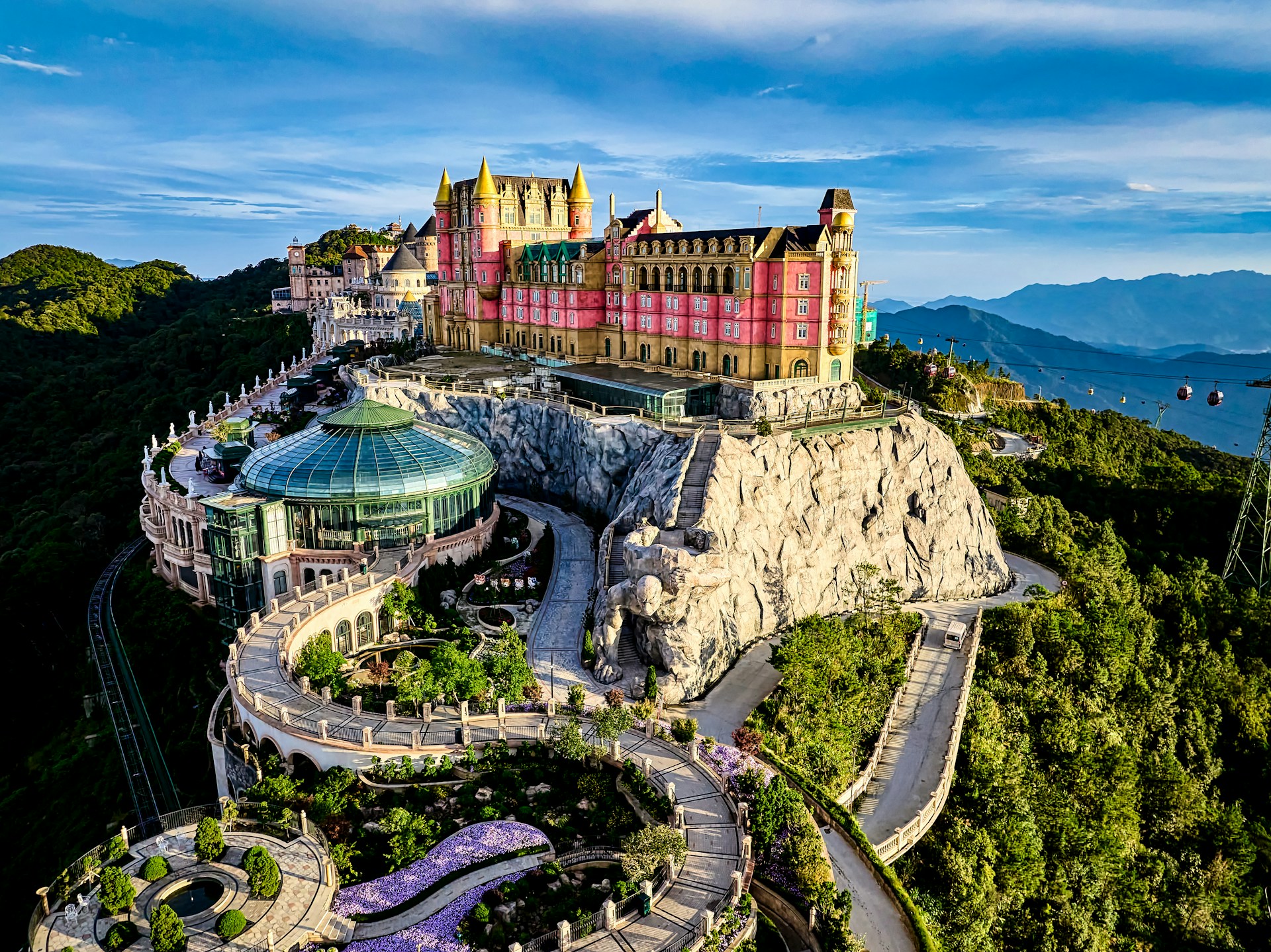
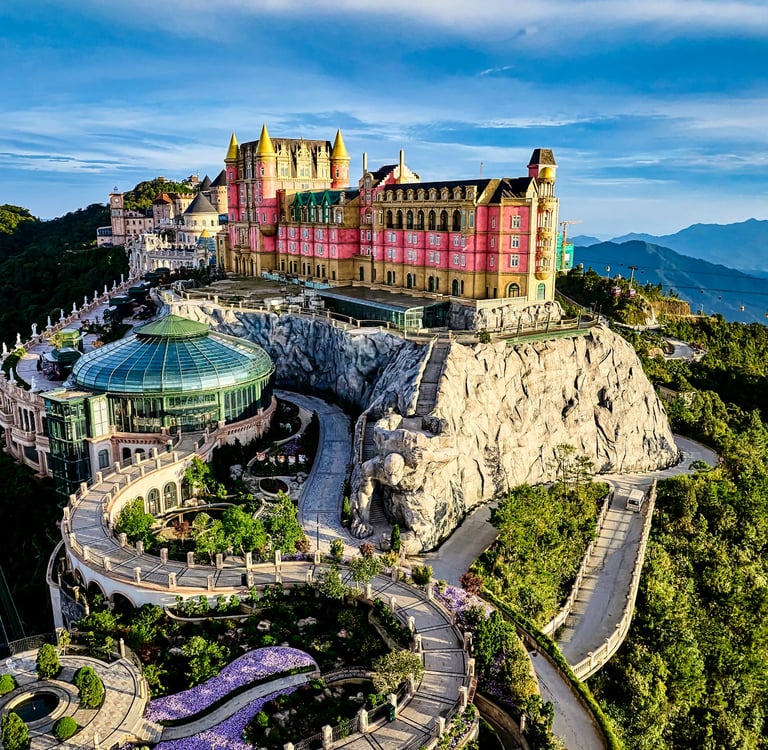
Set high in the mountains, Ba Na Hills is a hilltop complex that blends natural landscape with designed spaces including forested viewpoints, pagodas, the Golden Bridge and a European-inspired village. It is a place of contrasts, where cable cars rise above dense greenery and quieter corners sit just beyond the busiest paths.
The more time and flexibility you allow, the more the setting begins to reveal itself. You might move quickly from one viewpoint to another or pause in a shaded garden, noticing the soft light, the scent of flowers and the distant sound of temple bells.
Quick Guide to Ba Na Hills
For a quick overview before exploring the details:
Distance from Da Nang: Approximately 40km west of the city
Time needed: Half-day for the main highlights or a full day for a more complete visit
Best time to visit: Earlier in the day generally offers a quieter start
Well-known places: Golden Bridge, cable car, French Village, gardens
Getting there: Private transfer, shuttle or guided tour
Getting to Ba Na Hills from Da Nang
Ba Na Hills sits around 40km west of Da Nang, so the way you travel there can shape how your day unfolds. Sun World Ba Na Hills is generally open from 8:00 AM to 10:00 PM, although individual attractions and operating schedules can vary.
Disclosure: Some of the links in this post are affiliate links, which means we may earn a small commission if you choose to book through them at no additional cost to you.
A private car or driver offers flexibility and avoids fixed departure schedules. For travellers who prefer to arrange this in advance, a private transfer to Ba Na Hills can provide a straightforward way to travel there and back. If you are visiting independently, you can also purchase your Ba Na Hills admission ticket in advance.
Grab or a local taxi may also be suitable for reaching the hills as part of the wider range of transport options in Da Nang, although the return journey is worth considering before choosing this approach. Once you are ready to leave Ba Na Hills, availability and pricing may be less predictable than they are in central Da Nang.
Shuttle services and organised tours provide a more structured approach, with transport and other arrangements handled in advance. For travellers who would also like local guidance, a Ba Na Hills day tour can combine round-trip transfers, admission and a guide as part of the experience.
What to See and Do at Ba Na Hills
Ba Na Hills brings together a mix of designed spaces, mountain scenery, gardens, walkways and attractions across the hills above Da Nang. It is a place where the setting itself becomes part of the visit, with the landscape changing as you move through the complex.
How much time you need depends on how deeply you want to explore it. A half-day can give you time for the main areas, including the Golden Bridge and French Village, while a full day gives you more freedom to explore the gardens, temple areas and other attractions without having to move through everything as quickly.
Golden Bridge - A View Above the Trees
The Golden Bridge has become one of Da Nang's most recognised landmarks. Held by large stone hands rising from the hillside, it opens out to views across the surrounding hills and on clearer days, out toward the coastline.
At busier times, people move steadily across the bridge, but with a little patience there are still moments to pause and take in the scale, changing light and views along the walkway. Arriving earlier in the day can make this easier.
Cable Car - The Journey Up
The cable car forms an important part of the Ba Na Hills experience, with the journey to the higher areas taking around 20 minutes. Rather than simply being a way to reach the attractions, it gives you time to watch the landscape change as you climb into the mountains.
On clearer days, views can open across the surrounding mountains, Da Nang and the coastline, while cloud, mist and forested slopes can alter what you see along the way. The changing conditions are part of the character of the journey.
French Village - The Central Hub
The French Village is one of the main developed areas of Ba Na Hills, with restaurants, cafes and a mix of indoor and outdoor spaces set among European-inspired architecture.
Cobblestone streets, distinctive buildings and open areas create a distinctly designed environment against the surrounding mountain landscape, while smaller paths lead away from some of the busiest areas.
Alongside the Well-Known Spaces
Ba Na Hills also includes a broader mix of spaces and activities that can shape how your time unfolds.
Landscape gardens such as Le Jardin D'Amour offer a different atmosphere, while quieter walkways provide space to move away from busier areas. Ba Na Hills also has its own Linh Ung Pagoda. Elsewhere in Da Nang, another Linh Ung Pagoda on the Son Tra Peninsula rises above the coastline, facing out toward the sea.
More structured attractions include Fantasy Park, with indoor arcade-style games, rides and themed activity spaces. There is also the Alpine Coaster, along with larger dining spaces such as Beer Plaza, adding further variety to the visit.
Eating and Drinking
Eating and drinking tends to fit naturally into a day at Ba Na Hills, rather than requiring much advance planning.
You will find cafes with elevated views and restaurants within the French Village offering a mix of local and international options, whether you stop for a coffee, a quick meal or something longer while taking in the mountain setting.
Staying at Ba Na Hills
Ba Na Hills can be visited as a day trip from Da Nang, but staying overnight offers a different experience. As the main daytime visitors leave, the French Village and surrounding areas can become quieter, while an early start the following morning gives you more time before the day's activity builds.
The Mercure Danang French Village Bana Hills is the main accommodation option within the complex. For travellers considering one night here, staying within the complex gives more time to explore the attractions without rushing, experience the mountain setting beyond the busiest hours and enjoy the resort's facilities at a slower pace.
Practical Tips for Visiting Ba Na Hills
Conditions at Ba Na Hills can differ from those in Da Nang, with cloud, mist and temperature changing quickly at higher elevations. Comfortable shoes are useful for walking and stairs, while a light jacket, water and sun protection can make a full day more comfortable.
An earlier visit gives you a longer window around the main attractions before the busiest part of the day. Those staying overnight can also experience the complex later in the day and return to the attractions the following morning.
Around the temple areas and quieter spaces, a slow and more respectful approach is appropriate.
Final Thoughts
Ba Na Hills can be experienced in different ways, depending on your pace. For many, the visit centres around well-known landmarks like the Golden Bridge and French Village. With more time, the experience may extend into quieter areas that sit just beyond the main paths.
By allowing time, planning thoughtfully and staying open to both the main attractions and the spaces between them, the experience becomes more balanced and personal.
Beyond Ba Na Hills, Central Vietnam offers many different experiences to discover. If you are deciding where to explore next, our guide to Day Trips from Da Nang introduces destinations that are well suited to a day away from the city.
Explore More
Join The Journey
© 2025. All rights reserved.