Han Market, Da Nang: Shopping, Food and Local Life
Explore Han Market in Da Nang through its food stalls, clothing, tailoring and everyday shopping culture. A practical guide to one of the city's best known traditional markets.
Introduction
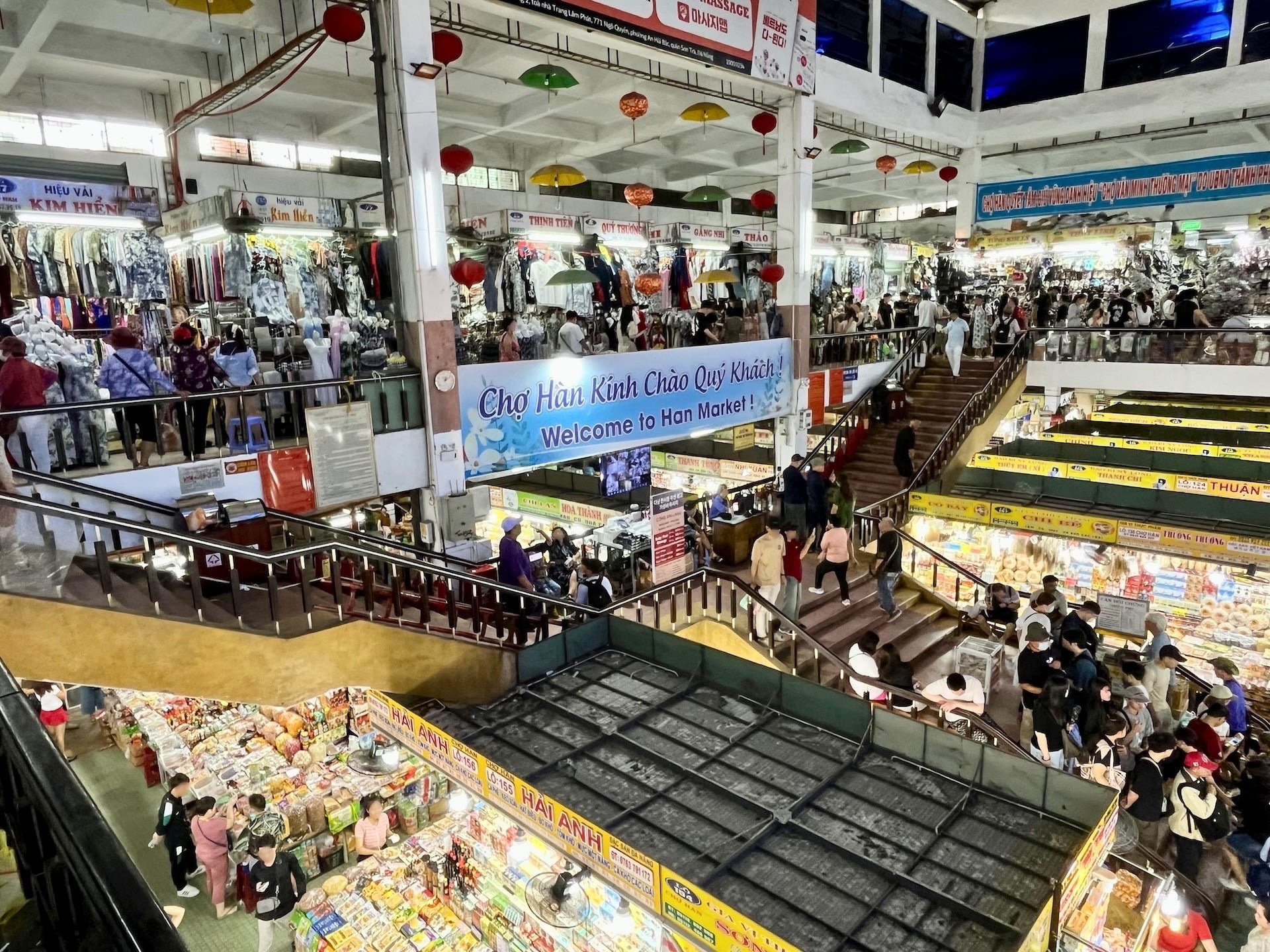
In central Da Nang, Han Market remains active throughout the day, with locals, vendors and travellers moving through its two level indoor structure from early morning onwards.
Known locally as Cho Han, the market remains part of Da Nang's everyday commercial life, with local shopping, food stalls and retail trade. Inside, different sections shift in energy as the day unfolds, moving from morning food shopping and fresh produce downstairs to afternoon browsing of clothing, fabrics and local goods upstairs.
For travellers exploring the city centre, Han Market offers a straightforward way to experience a working Vietnamese market environment within easy reach of central Da Nang.
What Han Market Is
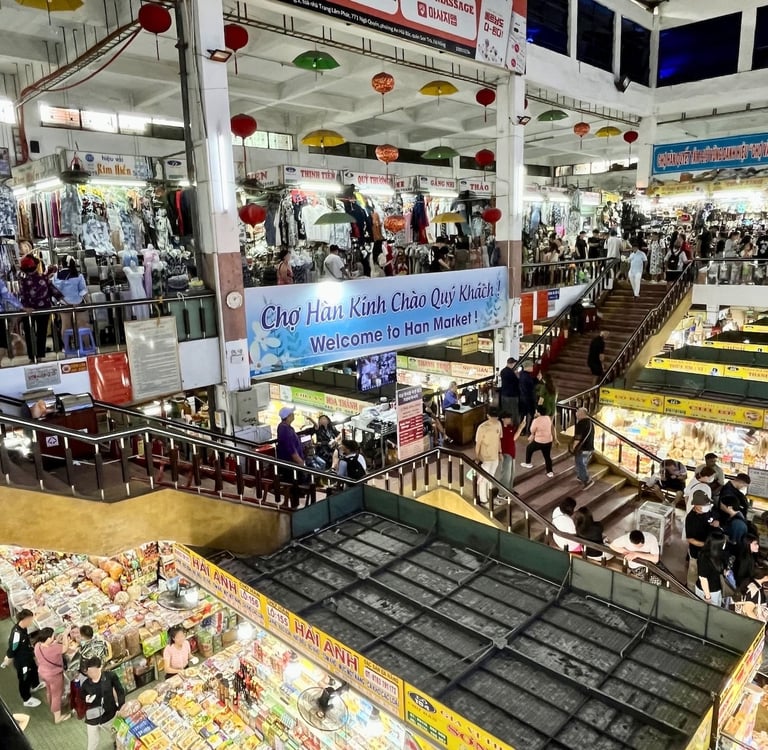
Han Market is a permanent, covered market building arranged across two main floors, part of the wider network of the markets in Da Nang that serve daily local life.
The market is organised through rows of small independent stalls, with different sections focused on food, clothing, fabrics, souvenirs and everyday goods. Each vendor typically focuses on a specific category of goods, creating a structured but lively environment shaped by daily trade.
The experience changes depending on when you visit and which level you spend time on, but the overall rhythm remains consistent with practical shopping and everyday commerce in one place.
Ground Floor: Food, Produce and Local Specialties
The ground floor is primarily centred around food, fresh produce and local ingredients. During the morning hours, this level is usually at its most active as residents shop for seafood, herbs, vegetables and supplies for the day ahead.
Here visitors will typically find:
tropical fruits and herbs used in everyday cooking
seafood and wet market style produce
dried foods, packaged snacks and regional specialty products
Vietnamese coffee, tea and locally made items
sauces, spices and condiments connected to central Vietnamese cuisine
Small food stalls are scattered through parts of the lower level, serving simple local dishes, Vietnamese coffee and cold drinks throughout the day.
Rather than being a curated food hall, this floor reflects everyday purchasing habits in Da Nang, especially around ingredients that connect to the city's wider street food culture.
Upper Floor: Clothing, Fabrics and Tailoring
Upstairs, the market transitions toward clothing, fabrics and tailoring services. Narrow rows of stalls display bags, accessories and everyday goods rather than the food or produce below.
Here, visitors will typically find:
everyday clothing and travel wear
fabrics and textile stalls
tailoring services and clothing alterations
traditional Ao Dai and custom made garments
shoes, bags and fabric based accessories
Some visitors come specifically for tailoring or fabric selection, while others browse casually while exploring the market.
Compared with the busier ground floor food sections, the upper level often feels more oriented toward browsing and slower movement between stalls.
When to Visit Han Market
Han Market is open daily, generally from 6:00am to 7:00pm, with activity levels changing throughout the day.
Early Morning (6:00am-9:00am)
This is when the market feels most connected to local daily routines. Fresh produce and seafood sections are busiest during the morning hours, while food stalls become active with breakfast customers.
At this time, much of the upper floor is still quieter compared with the ground level below.
Late Morning to Early Afternoon (9:30am-2:00pm)
This is often the busiest overall period inside the market. The upper floor becomes more active as travellers browse clothing, fabrics and tailoring stalls while spending time indoors during the hottest part of the day.
The ground floor also remains busy as shoppers move between food stalls, packaged goods and local products.
Late Afternoon (after 4:00pm)
By late afternoon the pace generally begins to soften. Crowds thin out gradually, particularly upstairs where some vendors begin winding down before evening closing time.
For some travellers, this can feel like a more relaxed time to browse through clothing and fabric stalls before the market closes for the day.
Han Market Within Central Da Nang
Han Market sits within the Hai Chau District. The surrounding streets are shaped by local businesses, cafes, small shops and everyday city movement throughout the day.
Because of its central location near the Han River, the market is often visited while exploring nearby parts of central Da Nang, including the riverfront area, Da Nang Cathedral and the Dragon Bridge.
Places such as the Museum of Cham Sculpture and APEC Park are also within relatively close reach depending on how you move through the city centre.
Disclosure: Some links in this guide are affiliate links. Booking through them may earn us a small commission at no extra cost to you.
For travellers who want to experience the Han Market within a broader view of Da Nang, a guided Ao Dai Rider tour offers another way to move between different parts of the city. Along the way, the route connects central districts, local food stops, riverside areas and nearby coastal viewpoints, creating a more connected introduction to the city's everyday movement and landmarks.
Final Thoughts
Han Market combines food, clothing, tailoring and everyday shopping within one of Da Nang's best known market spaces.
Some travellers come to browse fabrics or local products, while others visit simply to experience the atmosphere of a working Vietnamese market in the centre of the city.
Either way, spending time inside the Han Market offers a closer look at the everyday movement, shopping culture and daily routines that continue through central Da Nang.
Explore More
Join The Journey
© 2025. All rights reserved.