Small Temples, Shrines and Spiritual Life in Da Nang
Explore small temples, shrines and neighbourhood altars in Da Nang where everyday spiritual practices reveal a quieter side of the city's cultural and daily life.
Introduction
In Da Nang, spiritual life often reveals itself in subtle ways. Beyond the grand limestone caves and iconic pagodas of the Marble Mountains, a more intimate spiritual life reveals itself through smaller shrines and neighbourhood altars that appear along residential streets, inside family homes, beneath trees and at the edges of shop fronts.
It is easy to pass them without noticing, yet once recognised, they begin to feel like a natural part of the city rather than something hidden.
These spaces are not attractions created for visitors. They exist as part of daily routines, shaped by generations of belief that blend Buddhism, ancestor veneration and longstanding Vietnamese folk traditions. For many locals, pausing briefly at an altar, lighting incense or leaving a small offering is less about ceremony and more about continuity, a quiet way of acknowledging family connection, place and protection.
Exploring these spiritual corners is not about seeking them all out, but about learning to notice them. In doing so, you begin to see another layer of the city, one grounded in everyday care, memory and lived tradition.
Spiritual Life in Everyday Vietnam
Religion in Vietnam is rarely confined to a single structure or formal practice. Instead, it flows gently through daily life.
Many people visit Buddhist pagodas on important days or during festivals, yet spiritual expressions often happen close to home. Families maintain ancestral altars, business owners honour protective spirits and small roadside shrines offer places for quick moments of respect.
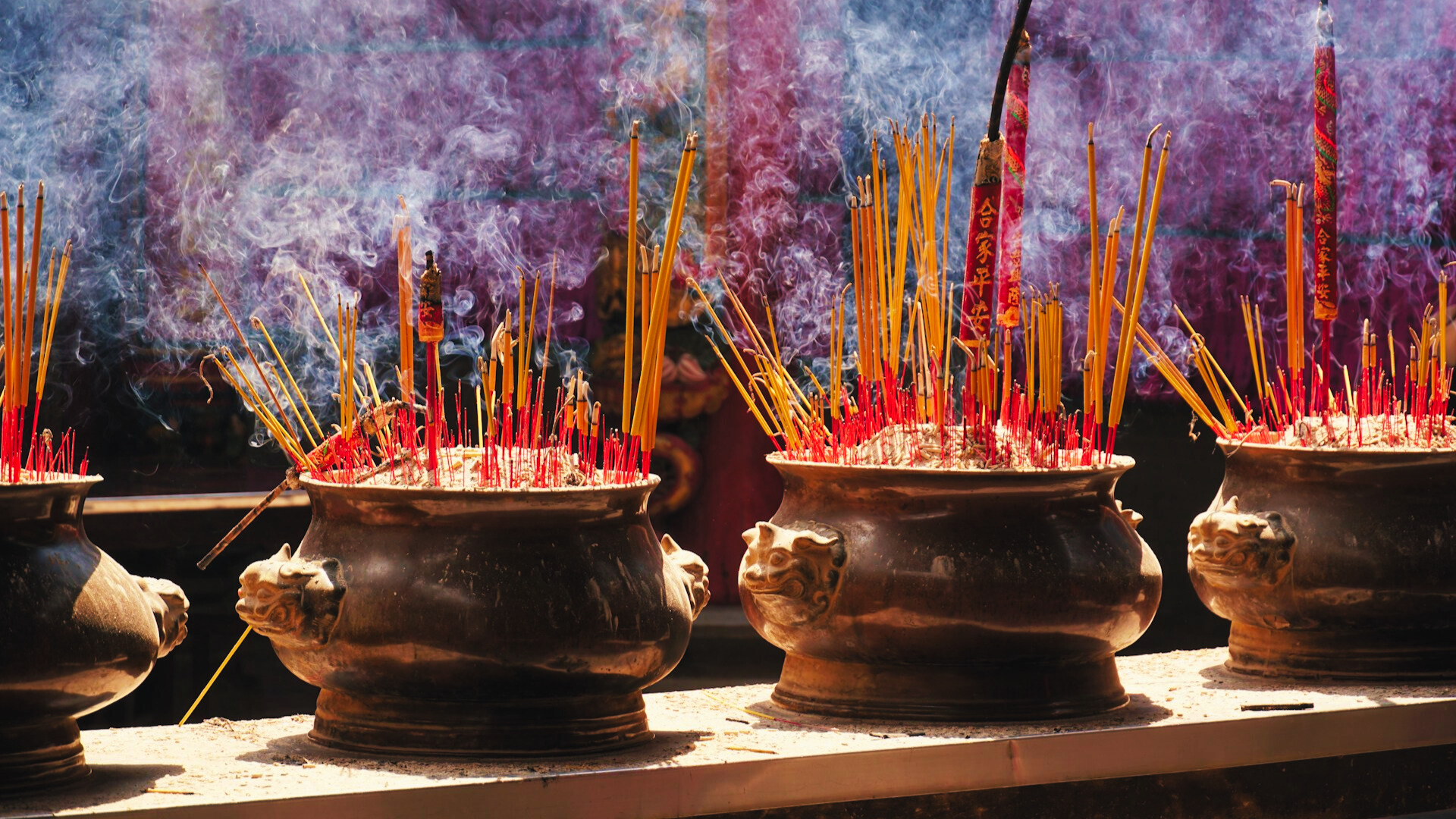
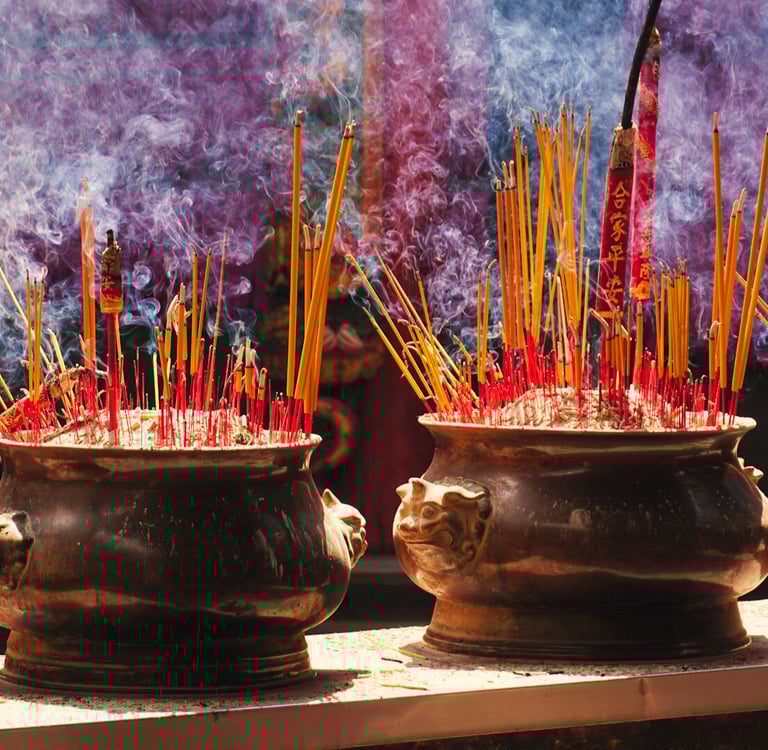
Lighting incense, one of the most familiar practices you will see, is typically an act of remembrance or gratitude. Smoke rising through still air is believed to carry through intentions toward ancestors or deities. Offerings of fruit, flowers, tea or small dishes of food reflect respect rather than extravagance.
These offerings are often gathered during everyday routines, sometimes during early visits to the markets of Da Nang, where daily life and quiet ritual naturally overlap.
You do not need detailed religious knowledge to appreciate these gestures. Simply recognising their meaning offers helpful context for what you will see throughout the city.
Where You Might Notice These Quiet Spaces
Once your attention adjusts, these spiritual corners begin to feel like a natural part of the streetscapes.
Residential neighbourhoods often hold the smallest and most personal shrines. Some sit just inside open doorways, while others face the street from shaded courtyards. Early morning is a particularly gentle time to notice them, when incense is freshly lit and the day has not yet gathered momentum.
Shopfront altars are also common throughout Da Nang. Positioned near entrances, they are typically dedicated to figures associated with prosperity and protection. You may see cups of tea, fresh flowers or neatly arranged fruit beside them, small gestures repeated daily with quiet consistency.
Roadside shrines occasionally appear beneath large trees, a quiet practice that continues even as you leave the city for the forested landscapes and slow, winding roads of the Son Tra Peninsula, where nature and stillness shape a different kind of spiritual atmosphere.
None of these spaces demand attention, yet together they form a quiet spiritual map woven through the city.
Smaller Pagodas to Visit in Da Nang
While many spiritual spaces are encountered by chance, a handful of lesser visited pagodas offer travellers an accessible way to experience this calmer atmosphere firsthand.
Phap Lam Pagoda, located near the city centre, is easy to reach yet often feels removed from surrounding traffic once you step inside. Trees shade the courtyard and the steady rhythm of visitors coming and going creates a sense of gentle continuity rather than crowding.
Chua Tam Bao Theravada, one of the few Theravada Buddhist temples in central Vietnam, presents a slightly different architectural style. Its open grounds and understated design encourage unhurried wandering, particularly in the morning when the light is softer.
Chua An Long Temple, set within a residential district, reflects the role neighbourhood temples play in local life. Visits here tend to be brief and practical, a stop to light incense, a quick prayer and a reminder that these spaces support routines rather than tourism.
You do not need to plan an entire day around these places. Even a short visit can provide useful context for the traditions you will notice elsewhere in the city.
How to Visit Shrines and Temples Respectfully
Spiritual spaces in Da Nang are welcoming, but they are first and foremost places of practice.
A few gentle considerations help maintain that atmosphere:
Dress modestly, keeping shoulders and knees covered where possible
Remove shoes before entering temple interiors for respect
Speak softly and move without haste
Observe before photographing people or active prayer areas
Follow the lead of locals if you feel unsure where to walk
There is no expectation to participate. Respectful presence is more than enough. If you are uncertain about timing, mid-morning or mid-afternoon often brings a comfortable balance. Active enough to observe daily rhythms, yet rarely crowded.
What These Spaces Reveal About Da Nang
At first, a smaller altar or shrine may seem like a minor detail. Over time, however, these details begin to shift how the city feels.
They suggest a culture that values remembrance without needing to announce it and one where tradition continues through daily repetition rather than performance.
You may not remember the location of every pagoda you pass, but the impressions tend to linger. Incense drifting into the street, flowers replaced with fresh ones, a doorway briefly glowing with candlelight.
Through these everyday scenes, Da Nang reveals itself as a place where modern life and long held belief exist comfortably side by side.
Finding Spiritual Spaces as You Explore
There is no checklist for finding Da Nang's spiritual corners and none is necessary.
Walk through neighbourhood streets. Pause when something catches your attention. Allow a few extra moments rather than hurrying past.
Often, understanding a destination comes not from its headline landmarks but from the practices people return to day after day without drawing notice to them.
In these understated spaces, the city speaks softly, yet with remarkable clarity.
Sometimes travel deepens not by seeing more, but by noticing what was already there.
If you would like to experience this spiritual landscape in a more open coastal setting, then explore our guide to the Linh Ung Pagoda on the Son Tra Peninsula, where the Lady Buddha overlooks the sea and the city softens into forested hills.
Explore More
Join The Journey
© 2025. All rights reserved.