Da Nang by Neighbourhood: How the City Changes as You Move Through It
Discover how Da Nang changes from neighbourhood to neighbourhood, from the coastline and city centre to the Han River and quieter green spaces. Learn how each area offers a different perspective on the city's everyday life.
Introduction
Da Nang is not a city that reveals itself all at once. It changes quietly as you move through it.
One moment you are near the sea, where mornings unfold slowly and the air feels open. A short ride later, you are surrounded by narrow streets, cups of coffee resting on low tables and the hum of daily routines. By evening, the river reflects light and movement, drawing people together naturally.
Although Da Nang is relatively compact, each part of the city has its own atmosphere, making it easy to experience different rhythms within a single day.
Understanding Da Nang is not about memorising neighbourhood names or checking off landmarks. It is about noticing how the city feels as you pass through it, observing the subtle shifts in pace, sound and atmosphere from one area to the next.
This guide isn't here to rank neighbourhoods or tell you where to stay. Instead, it helps you notice how Da Nang changes, so you can move through it with more awareness and intention.
Near the Coast: Open Mornings and Unrushed Days in Da Nang
Along the coastline, the city feels spacious. Streets are wider, mornings begin earlier and the rhythm is shaped by light, tides and weather rather than schedules.
Locals walk or cycle near My Khe Beach just after sunrise. Cafes open quietly and the day starts gently, even when the surrounding streets become busier later on, particularly around An Thuong.
Time here feels less compressed. Whether you stay nearby or simply pass through, the coast introduces a side of Da Nang that allows breathing room. It is a reminder that not every moment needs to be filled.
This part of the city suits slow starts, reflective walks and easing into the day without urgency.
Residential Streets in Da Nang: Everyday Life at Close Range
Move a little inland and Da Nang becomes more intimate. Here, streets narrow and homes open directly onto the road. Food stalls appear as part of the daily rhythm, serving neighbours who know exactly where to sit and what to order. Conversations overlap and motorbikes weave carefully through familiar routes.
These neighbourhoods don't announce themselves. There are no clear markers or attractions. What draws you in is repetition, with daily habits unfolding naturally rather than being performed for an audience.
Passing through these areas as a visitor can feel grounding. You are reminded that Da Nang is not only a destination to explore, but also a city where people live their everyday lives.
The City Centre in Da Nang: Movement, Contrast and Energy
In the central areas of Da Nang, particularly around Hai Chau, the city becomes more layered. Markets, offices, small shops and cafes exist side by side. The area remains active throughout the day, with people moving between work, errands and everyday routines. Sounds overlap, conversations continue and the rhythm feels connected to daily life.
Even here, the energy rarely feels overwhelming. There is a sense of flow rather than pressure, with movement that feels organised rather than chaotic. The city centre reflects the balance Da Nang maintains between modern growth and familiar routines.
For travellers, this part of the city offers contrast. It shows how Da Nang brings together different sides of urban life, where modern development, traditional markets and everyday routines exist alongside each other within a relatively compact space.
It is a place best explored on foot, allowing small discoveries to emerge between destinations.
The Riverfront in Da Nang: Space to Pause Without Leaving the City
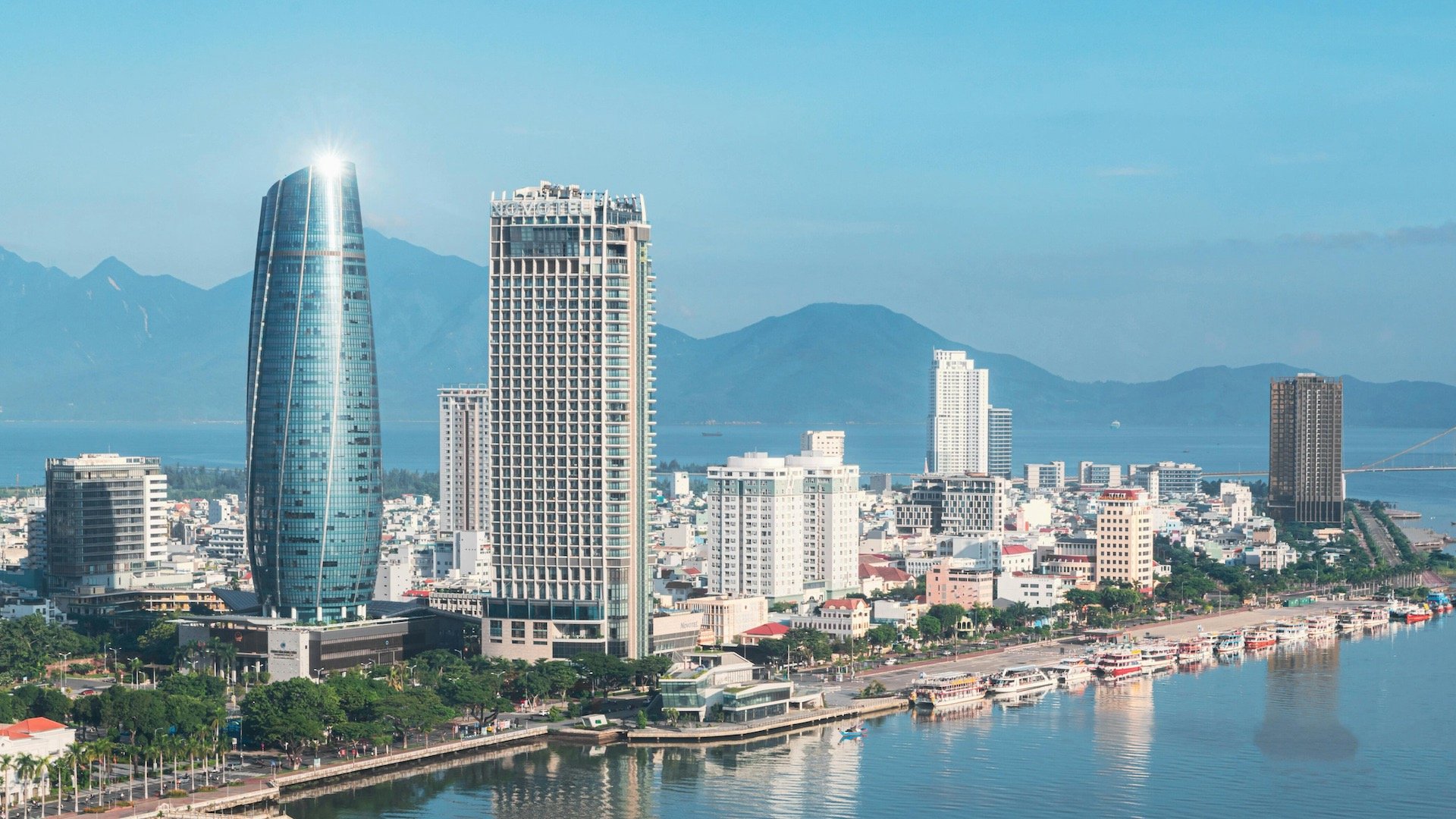
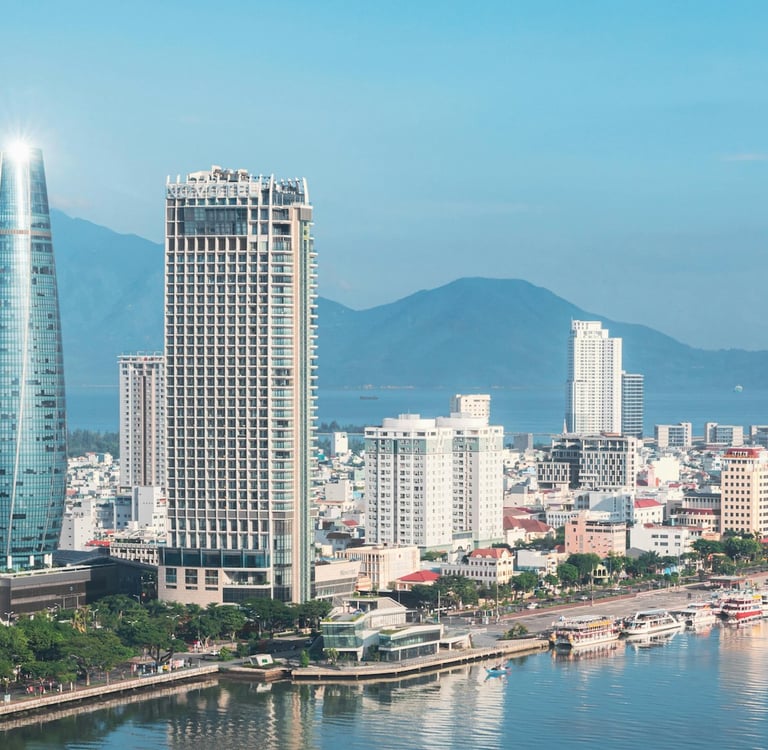
The Han River introduces another side of Da Nang. Here, movement slows. People linger. The water creates a sense of openness that softens the surrounding activity. As evening approaches, the river shifts into a shared space rather than simply a route through the city.
You will see couples walking quietly, families gathering and individuals sitting alone, taking in the movement of the city around them.
The riverfront isn't about attractions. It is about perspective, seeing the city from a slight distance while still being part of it.
Higher Ground and Green Edges: Quiet Beyond the City
At the edges of Da Nang, particularly where the city begins to soften into hills and greenery, the rhythm shifts once more. Roads curve, development thins out and sound softens.
These areas feel more deliberate, often requiring a reason to visit rather than passing through by chance. For those drawn to stillness or nature, especially around the Son Tra Peninsula, these areas offer a different relationship with the city, one that prioritises space, scenery and quiet observation.
Reaching these places often involves more planning, but the slower pace can feel like a natural counterbalance to urban movement.
Moving Between Neighbourhoods
One of the things that makes Da Nang feel approachable is how easily you can move between these different atmospheres.
A short ride can take you from the sea to the city centre, from busy streets to quiet corners. Each transition adds context to the last.
Disclosure: Some links in this post are affiliate links. Booking through them may earn us a small commission at no extra cost to you.
Some travellers enjoy exploring independently, allowing curiosity to guide their direction. Others prefer guided experiences that connect different parts of the city through food, stories or everyday routines, helping reveal details that can be easy to miss on the first visit. A guided experience such as the Da Nang City Tour with Aodai Rider offers another way to move through the city, combining local food with neighbourhood exploration and a closer look at everyday life.
Either way, how you move through the city shapes what you notice.
Letting the City Set the Pace
Da Nang doesn't demand that you see everything. It offers subtle shifts in rhythm, light and energy that reward mindful attention more than ambition.
Rather than asking which neighbourhood is best, it helps to ask a different question. Where do I feel most present right now?
As you move through Da Nang, allow those feelings to guide you. The city reveals itself gradually, not through highlights, but through how it changes as you go.
Curious how Da Nang's rhythm changes throughout the day? Discover our A Day in Da Nang guide and see how each hour brings a different mood, from early morning routines to evening gatherings.
Explore More
Join The Journey
© 2025. All rights reserved.