Marble Mountains, Da Nang: Moving Slowly Through Stone, Light and Quiet
Explore the Marble Mountains in Da Nang, where caves, temples and viewpoints reveal one of Vietnam's most recognisable landmarks. Learn what to expect, how to visit and what makes this spiritual site unique.
Introduction
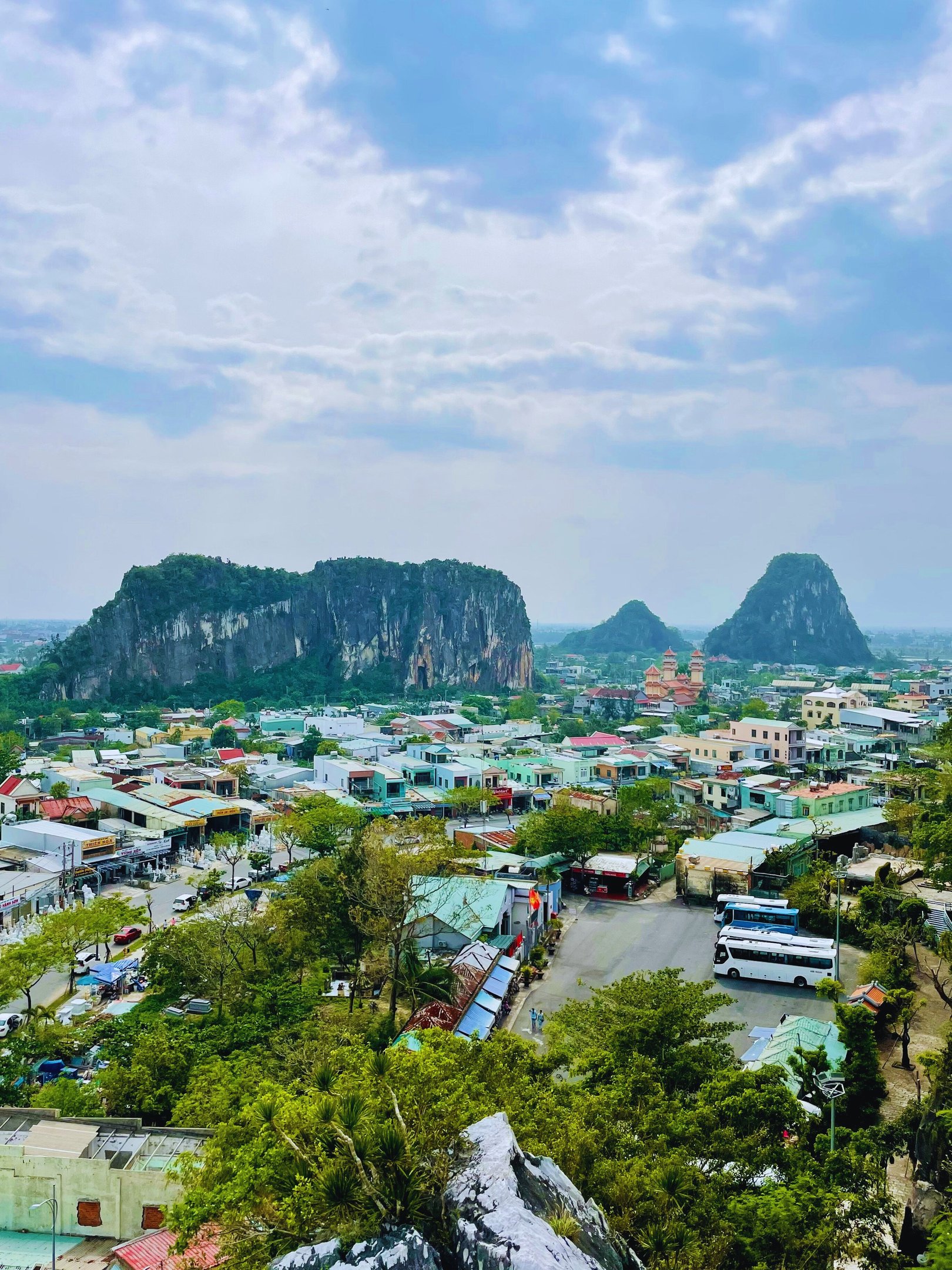
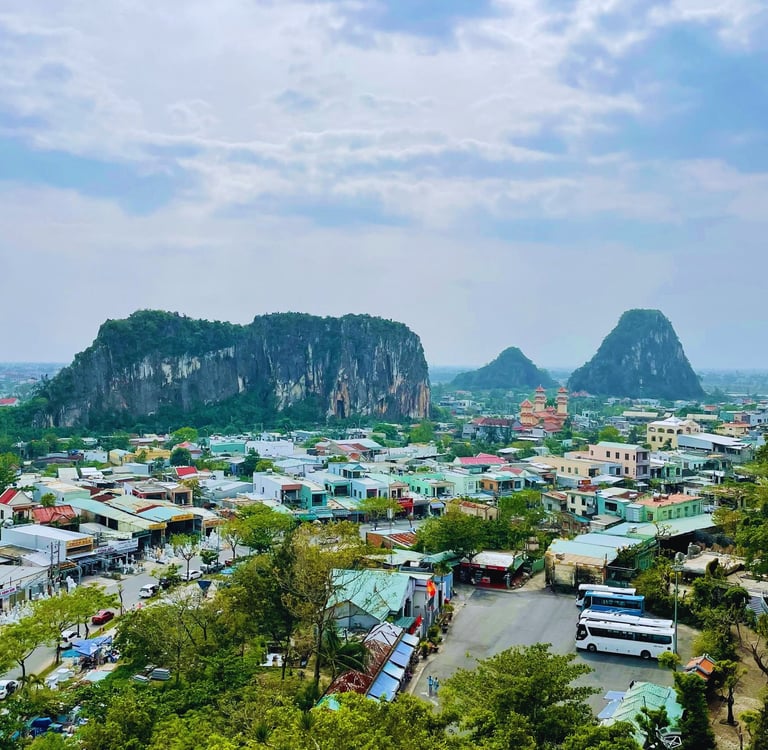
Rising quietly between Da Nang and the coast, the Marble Mountains are one of the city's most recognisable landmarks. This group of five limestone and marble hills is known for its caves, pagodas, viewpoints and long spiritual history. From a distance, they appear solid and still, barely hinting at what lies inside.
Up close, the experience is more layered. Stone stairways lead into shadowed caves. Incense drifts from small shrines carved into rock. Light filters through openings above, shifting across temple floors as the day moves on. This is not a place designed to be rushed.
Visiting the Marble Mountains is less about reaching a summit and more about how you move through the space. It rewards patience, curiosity and moments of pause, allowing each traveller to take something slightly different away with them.
What the Marble Mountains Are
The Marble Mountains, known locally as Ngu Hanh Son, are a group of five limestone and marble hills named after the five elements: metal, wood, water, fire and earth. Of the five, Thuy Son (Water Mountain) is the most accessible and most visited, home to caves, pagodas and viewpoints.
For centuries, these mountains have been a place of spiritual significance. Temples sit naturally within caves, altars appear where stone opens into light and the rhythm of prayer blends quietly with the sound of footsteps on worn stairs.
Today, the Marble Mountains are often included on day trips from Da Nang, attracting a mix of locals, pilgrims and visitors. While the site is popular, it still holds moments of stillness for those willing to slow down, offering a glimpse into Da Nang's spiritual life.
Planning your visit to the Marble Mountains
The Marble Mountains are located just south of Da Nang, making them easy to reach from most parts of the city. Whether you are staying near My Khe Beach, in Hai Chau or around An Thuong, the journey is relatively straightforward.
Many travellers choose to visit by:
Grab or Taxi
Scooter or motorbike
Half-day tours that combine the Marble Mountains with nearby attractions
Some visitors prefer to explore independently, moving through the site at their own pace and following their curiosity through caves, stairways and temples. Others choose a guided visit, particularly if they would like more context about the mountains' history, spiritual significance and layout, details that are not always obvious on a first visit.
Disclosure: This section contains affiliate links. If you choose to book through them, Worldugo may earn a small commission at no additional cost to you.
A half-day guided tour can be a practical option for travellers who prefer not to organise transport themselves while also gaining local insight into the mountains. A morning Marble Mountains tour or an afternoon Marble Mountains tour, with nearby attractions included as part of the experience, gives travellers flexibility in choosing when to visit.
The entrance area includes ticket counters, small shops and places to buy drinks before beginning the walk through the mountains. A lift is available for those who prefer to avoid the climb from the base, although steps remain part of the experience once inside.
Moving Through Caves, Steps and Shrines
Walking through the Marble Mountains is not a single, linear journey. Paths branch in different directions, stairways connect caves and temples and narrow passages often open unexpectedly into larger chambers. Exploring becomes part of the experience rather than simply following a set route.
Inside the caves, shrines sit quietly against stone walls while incense drifts through the air and candles flicker beside carved figures. Many visitors naturally lower their voices, responding to the atmosphere rather than any formal instruction.
As you climb higher, viewpoints open across Da Nang's coastline, with views stretching towards My Khe Beach and north to Son Tra Peninsula. After moving through shaded caves and temple spaces, the open views create a natural contrast with what lies below.
There is no single correct way to experience the Marble Mountains. Some travellers move steadily from one viewpoint to the next, while others spend longer inside caves and temples. The mountains allow both.
Temples and Spiritual Spaces
The pagodas within the Marble Mountains are not separate attractions added to the landscape. They are woven into the rock itself, shaped by the terrain rather than built apart from it, giving many of the temples a close connection to the surrounding caves and stone.
As you explore, you may see monks moving quietly through temple grounds, locals lighting incense or visitors pausing for a moment of reflection. These are everyday expressions of a place that continues to hold spiritual importance beyond its role as a visitor attraction.
There is no expectation to participate in religious practices. Observing respectfully, speaking quietly and dressing modestly are simple ways to show consideration while moving through these shared spaces.
Crowds, Timing and Finding Quieter Moments
The Marble Mountains are one of Da Nang's most popular attractions, so they can become busy, particularly during the late morning and early afternoon when many organised tours arrive. At these times, stairways, caves and viewpoints often see the highest number of visitors.
If your schedule allows, visiting earlier in the morning or later in the afternoon provides a more relaxed experience. The changing light also gives the caves, temples and viewpoints a different character as the day progresses.
Even during busier periods, quieter moments can still be found. Pausing between the main viewpoints or spending a little longer inside the caves often creates opportunities to experience the mountains at a slower pace.
The Non Nuoc Stone Village Nearby
At the base of the mountains lies the Non Nuoc stone carving village, where artisans have worked with marble for generations. Shops line the road, displaying sculptures ranging from small figures to large decorative pieces.
While some displays are clearly aimed at visitors, the craft itself is rooted in long-standing tradition. For those interested, a slow walk through the village adds context to the relationship between the mountains and the people who live beside them.
Final Reflections
The Marble Mountains bring together many sides of Da Nang in one place. They are a cultural landmark, an active spiritual site, a scenic viewpoint and part of the surrounding community that has grown alongside them for generations.
Whether you visit for the caves, the temples or the views across the coastline, the experience is shaped as much by how you move through the mountains as by the places you stop. Taking time to pause often reveals details that are easy to miss when rushing from one viewpoint to the next.
If your visit leaves you wanting to explore more of Da Nang's spiritual landscape, the Linh Ung Pagoda on the Son Tra Peninsula offers a different perspective where open coastal views and quiet temple grounds continue the journey beyond the Marble Mountains.
Explore More
Join The Journey
© 2025. All rights reserved.